
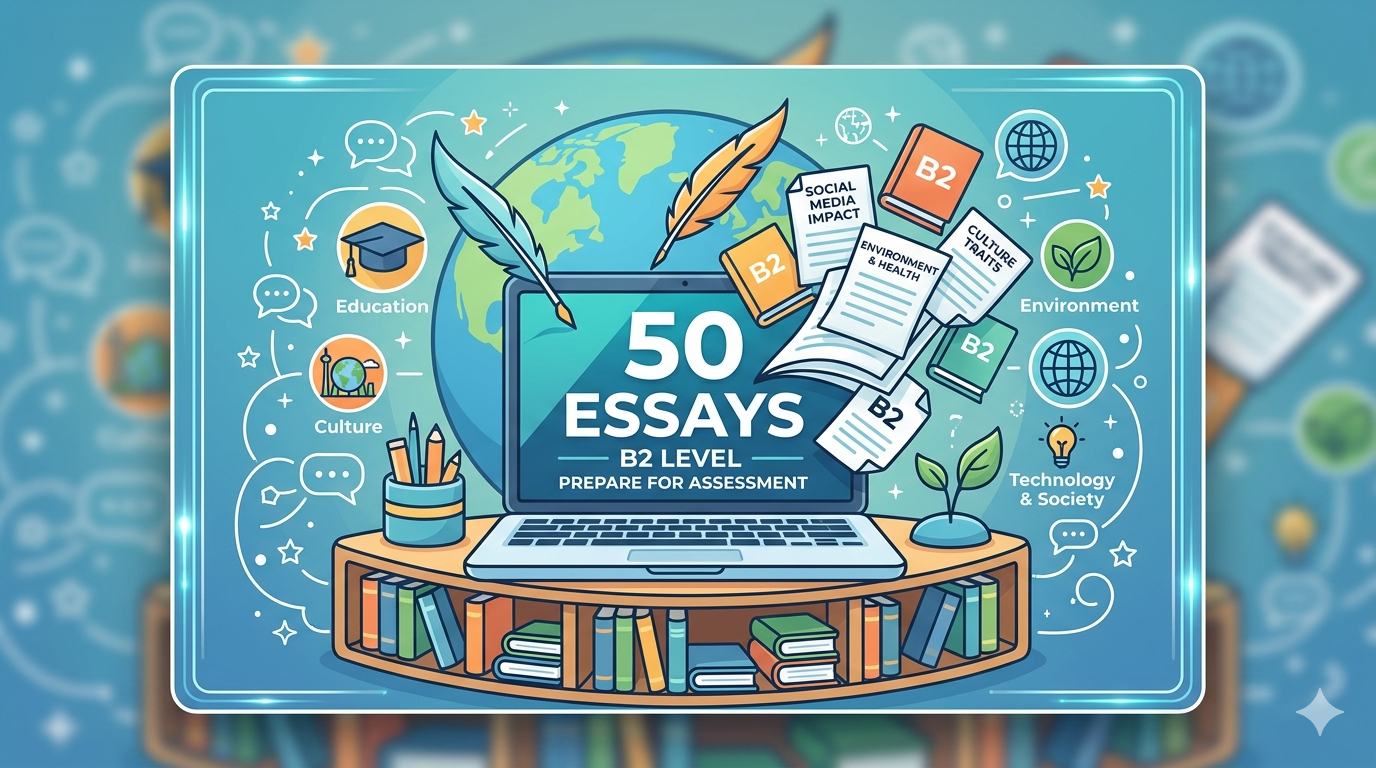
If you are looking for high-quality B2 English Essays, you have come to the right place. This guide provides 50 diverse topics designed to help learners master the vocabulary and structures needed for upper-intermediate English exams.
1. The Impact of Social Media on Mental Health
In recent years, social media has become an essential part of daily life. While it helps people stay connected, we must acknowledge its negative effects on mental health. Many teenagers feel reluctant to share their real lives, instead posting artificial versions of themselves to gain likes. This often leads to feelings of inadequacy. To maintain a sustainable relationship with technology, users should limit their screen time and focus on real-world interactions.
2. Should Smart Devices be Banned in Schools?
The debate over smartphones in classrooms is crucial for modern education. Some argue that these devices are a massive distraction that prevents students from focusing on precise instructions. Others believe that technology is a beneficial tool for research. Ultimately, a flexible approach is best: schools should not eliminate devices entirely but should regulate their use to ensure they are only used for academic purposes.
3. Is Artificial Intelligence a Threat to Jobs?
As AI continues to evolve, many workers fear their roles will collapse. It is apparent that automation can perform tasks more accurately than humans in some sectors. However, humans are capable of creativity and empathy, which machines cannot acquire. Instead of viewing AI as a threat, we should adapt by learning how to work alongside these alternative technologies.
4. The Advantages of Working from Home
Remote work has gradually become the norm for many professionals. One primary benefit is the flexible schedule, which allows for a better work-life balance. Additionally, it eliminates the daily commute, saving enormous amounts of time. While some feel isolated, the majority of workers find that they are more productive when they can adjust their environment to suit their needs.
5. Has Technology Made Us Less Social?
Although we are more connected than ever, some argue that the quality of our social lives has declined. People frequently check their phones during dinner, which can be seen as a deliberate lack of attention to those present. However, technology also allows us to maintain relationships across massive distances. Whether technology is social or anti-social depends entirely on how the individual chooses to use it.
6. Should University Education be Free?
Providing free higher education is a crucial topic in many countries. Supporters argue that it ensures everyone has an adequate opportunity to succeed, regardless of their financial background. However, critics suggest that it might lead to a massive increase in taxes. Ultimately, the goal should be to find a sustainable system that allows talented students to acquire knowledge without falling into deep debt.
7. The Importance of Learning a Second Language
In our globalized world, being bilingual is a beneficial skill. It allows individuals to broaden their horizons and understand different cultures more thoroughly. While English is primarily used in international business, learning another language is essential for building deeper connections. It also helps the brain adapt to new ways of thinking, making the learner more flexible and open-minded.
8. Is a Degree Necessary for a Successful Career?
Many people assume that a university degree is the only path to success. While it is apparent that certain professions, like medicine, require formal training, other industries value experience more. Many entrepreneurs have reached enormous success by focusing on alternative ways of learning, such as apprenticeships. Success frequently depends more on a person’s deliberate effort and skills than on a piece of paper.
9. The Benefits of Taking a Gap Year
Taking a year off before university allows students to explore the world and gain independence. During this time, they can devote themselves to volunteering or working, which helps them mature before starting intense studies. While some parents fear their children will become reluctant to return to education, most students find that a gap year helps them clarify their future goals.
10. Vocational Training vs. Academic Degrees
Vocational training, such as learning to be a plumber or electrician, is often underestimated. These roles are essential for society to function adequately. While academic degrees focus on theory, vocational courses provide precise practical skills. Both paths are equally valuable, and students should be encouraged to choose the one that matches their capabilities and interests.
11. How to Reduce Your Carbon Footprint
Reducing our impact on the planet is crucial for a sustainable future. Individuals can adjust their daily habits, such as choosing to cycle instead of driving. Additionally, we should aim to eliminate single-use plastics from our homes. While these changes may seem small, they substantially reduce waste. Ultimately, protecting the environment requires a deliberate effort from everyone.
12. Should Plastic Packaging be Banned?
The massive amount of plastic waste in our oceans is an apparent problem. Many argue that a total ban on plastic packaging is the only adequate solution. While this might be difficult for some businesses to adapt to, alternative materials like paper or glass are much more eco-friendly. If we acknowledge the damage being done, we can transition to a cleaner, greener economy.
13. The Impact of Fast Fashion
Fast fashion allows people to buy trendy clothes at relatively low prices. However, the environmental cost is enormous. The industry consumes massive amounts of water and produces high levels of pollution. To be more responsible, consumers should analyze their shopping habits and choose high-quality items that last longer. Buying less but better is an essential step toward a better world.
14. Is the Government Responsible for Health?
Many people believe the government should emphasize healthy living to combat rising obesity rates. This could involve making healthy food more accessible and putting higher taxes on sugary drinks. While individuals are capable of making their own choices, clear laws can boost public health. A healthy population is beneficial for a country’s economy and its healthcare system.
15. The Benefits of a Vegetarian Lifestyle
Adopting a vegetarian diet can have significant health and environmental benefits. It often leads to a reduction in heart disease and helps preserve natural resources. Some people are reluctant to stop eating meat, but even having “meat-free days” can be beneficial. As more alternative protein sources become available, making the switch has become easier than ever.
I’ll keep the momentum going! Here are the next five essays (16–20), focusing on Education and Career. These use B2 vocabulary like standardized, demonstrate, and encounter.
16. The Impact of Standardized Testing
Standardized tests are a frequent part of modern education. While they help schools analyze student performance across different regions, many believe they limit creativity. Teachers often feel pressured to “teach to the test,” which means they might abandon more interesting topics. A more flexible assessment system could better demonstrate a student’s true potential and unique talents.
17. Homeschooling vs. Traditional Schooling
Choosing between homeschooling and traditional school is a significant decision for parents. Homeschooling allows for a precise and personalized curriculum, but it may eliminate the chance for children to socialize with a diverse group of peers. Traditional schools, on the other hand, provide a structured environment where students encounter different perspectives. Both methods are capable of providing a high-quality education.
18. How to Maintain a Work-Life Balance
In a competitive world, maintaining a healthy balance between work and home is essential. If employees devote too much time to their jobs, they may eventually suffer from burnout. It is crucial to set clear boundaries and ensure there is adequate time for rest and hobbies. Companies that emphasize well-being often see a boost in productivity and employee loyalty.
19. Qualities of an Effective Leader
An effective leader must possess more than just technical skills. They need to be capable of listening to their team and making deliberate decisions that benefit everyone. A good leader should also clarify goals and acknowledge the hard work of others. By staying adaptable during difficult times, a leader can ensure the team remains motivated and successful.
20. Should Soft Skills be Taught in Schools?
While academic subjects like math are crucial, “soft skills” such as communication and teamwork are equally beneficial. In the modern workplace, employers look for people who can effectively collaborate and solve problems. If schools incorporate these skills into the curriculum, students will be better prepared to adjust to the professional world and build sustainable careers.
Moving right along! We are now entering the Lifestyle & Culture section (21–25). These essays use B2-level terms like urban, traditional, preserve, and perspective.
21. Living in a Big City vs. a Small Village
Choosing where to live is a significant decision that depends on personal preference. Life in a big city offers massive opportunities for career growth and entertainment. However, the high cost of living and noise can be challenging. In contrast, a small village provides a peaceful environment where people frequently know their neighbors. Ultimately, the best choice is the one that allows an individual to maintain a sustainable and happy lifestyle.
22. The Importance of Preserving Cultural Traditions
In a globalized world, many people fear that local traditions will eventually disappear. It is essential to preserve these customs because they provide a sense of identity and belonging. While we should adapt to modern life, we must also acknowledge the value of our history. By celebrating traditional festivals, we can ensure that future generations understand their roots and appreciate their heritage.
23. How Travel Broadens the Mind
Traveling to new places is a beneficial experience that helps people acquire a broader perspective on the world. When we encounter different cultures, we learn to analyze our own beliefs more critically. Travel also encourages people to be more flexible and patient when things do not go as planned. Consequently, those who travel often find they are more open-minded and capable of understanding others.
24. The Impact of Advertising on Consumers
Advertising is everywhere, and its influence on our behavior is enormous. Companies use artificial images and clever slogans to persuade us to buy products we may not actually need. While ads can be informative, consumers must stay cautious and analyze whether a purchase is truly necessary. Being a conscious shopper helps people save money and avoid the inevitable clutter of modern consumerism.
25. Living in a Multicultural Society
Living in a place with many different cultures is a massive advantage. It allows people to interact with others who have different backgrounds, which can eliminate prejudice and fear. In a multicultural society, we are frequently exposed to new foods, music, and ideas. This diversity makes a community more vibrant and capable of solving problems through mutual understanding and respect.
Continuing with the next five essays (26–30), focusing on Argumentative & General Interest topics. These use B2 vocabulary such as justify, ethical, substantial, and distinguish.
26. The Ethics of Zoos: Conservation vs. Animal Rights
The role of zoos in the modern world is a frequent topic of debate. Supporters argue that zoos are essential for the conservation of endangered species and provide beneficial educational opportunities for children. However, critics claim that keeping animals in cages is not ethical and that it is impossible to recreate a natural habitat in a city. Ultimately, zoos must demonstrate that they prioritize animal welfare over profit to justify their existence.
27. Is Space Exploration Worth the Cost?
Governments spend massive amounts of money on space missions, leading some to question if the cost is justified. Critics argue that we should devote these funds to solving problems on Earth, such as poverty or climate change. On the other hand, space exploration has led to substantial technological breakthroughs that benefit everyone. While the financial cost is enormous, the knowledge we acquire about the universe is considered invaluable by many.
28. Should the Voting Age be Lowered to 16?
Some people believe that 16-year-olds are mature enough to participate in the democratic process. They argue that young people are capable of understanding political issues and that their future will be directly impacted by current laws. Opponents, however, feel that teenagers may be too easily influenced by social media or their parents. To make a deliberate decision, society must analyze whether young citizens have sufficient knowledge to vote responsibly.
29. The Influence of Celebrity Role Models
In the digital age, celebrities have a massive influence on the behavior of young people. While some stars use their platform to promote sustainable lifestyles or charity work, others may emphasize wealth and artificial beauty standards. It is crucial for parents and teachers to help children distinguish between positive and negative influences. Ultimately, being a role model carries a significant responsibility that not every celebrity is ready to acknowledge.
30. Should Public Transport be Free?
Making public transport free could significantly reduce city pollution and traffic congestion. If commuting were free, many people would abandon their cars in favor of buses or trains. This would boost the quality of air in urban areas and make the city more accessible for low-income residents. Although the government would need to find alternative ways to fund these services, the long-term environmental benefits would be enormous.
31. The Impact of Reality TV on Society
Reality TV has become a massive part of modern entertainment. While some viewers find it amusing, others argue that these shows distort reality by focusing on drama and conflict. This can have a negative influence on young people who may assume that fame is more important than hard work. To maintain a healthy perspective, audiences should analyze the content they consume and distinguish between scripted drama and real life.
32. Should Competitive Sports be Compulsory?
Many schools believe that competitive sports are essential for building character and teamwork. Engaging in physical activity helps students boost their health and acquire leadership skills. However, making these sports compulsory can be stressful for those who are not naturally athletic. A more flexible approach would be to offer alternative activities, such as yoga or dance, to ensure that every student remains active and motivated.
33. Does Money Truly Buy Happiness?
The question of whether wealth leads to happiness is a frequent topic of discussion. While having sufficient money to cover basic needs like housing and food is crucial, research suggests that excessive wealth does not guarantee joy. Happiness is often derived from meaningful relationships and personal achievements rather than massive bank accounts. Ultimately, money is a tool that can provide comfort, but it cannot replace emotional well-being.
34. The Effects of Tourism on Local Communities
Tourism can provide a substantial boost to a local economy by creating jobs and supporting small businesses. However, it can also lead to environmental damage and the loss of local traditions if not managed in a sustainable way. It is essential for governments to regulate the number of visitors in popular areas to preserve the natural beauty of the region. When done correctly, tourism allows people to appreciate different cultures without causing harm.
35. Should Historical Monuments be Preserved?
Historical monuments are massive landmarks that connect us to our past. Some argue that these structures are expensive to maintain and that the space should be used for modern buildings. However, if we abandon our history, we lose a part of our identity. It is beneficial to preserve these sites because they serve as educational tools and remind us of the events that shaped our current society.
36. The Influence of Family Traditions
Family traditions are essential for creating a sense of belonging and stability. They allow parents to pass on values and stories to their children, which helps clarify their family history. While some traditions may seem old-fashioned, they frequently provide a predictable structure during stressful times. By maintaining these customs, families can ensure that their unique identity is preserved for future generations.
37. Is Modern Art as Valuable as Classical Art?
The value of art is often subjective, meaning it depends on the person looking at it. Classical art is admired for its precise techniques and historical importance. In contrast, modern art often focuses on alternative ways of expressing emotions or ideas. While some critics argue that modern pieces lack skill, others believe they demonstrate a massive amount of creativity. Ultimately, both styles are capable of inspiring the public.
38. How Music Influences Our Mood
Music has an enormous impact on our emotional state and can even boost our productivity. Many people use upbeat music to feel more energetic during exercise or calm music to reduce stress after work. Research has shown that music can substantially improve a person’s mental health. Whether we are listening to a fast or slow rhythm, music is a beneficial tool that helps us adjust to the challenges of daily life.
39. Should the Production of Cigarettes be Illegal?
Smoking is a frequent cause of serious health problems, leading many to argue that cigarettes should be eliminated entirely. Supporters of a ban suggest that it would dramatically improve public health and save governments massive amounts of money on healthcare. However, others believe that individuals should be capable of making their own choices. A flexible solution might be to increase taxes and regulate where people are allowed to smoke.
40. The Importance of Volunteering
Volunteering is a noble way to contribute to society while gaining valuable experience. It allows individuals to acquire new skills and meet people from different backgrounds. Many students find that volunteering helps them identify their career interests. Furthermore, local charities rely on volunteers to provide essential services to the community. Ultimately, giving your time to others is a mutually beneficial experience for everyone involved.
Here are the final ten essays (41–50) to complete your list. These cover a variety of argumentative and lifestyle topics using B2-level vocabulary like controversial, evaluate, innovative, and perspective.
41. The Ethics of Animal Testing
The use of animals in laboratory research is a highly controversial issue. Some argue that it is essential for medical breakthroughs and ensuring that new drugs are safe for humans. However, animal rights activists believe that these methods are cruel and that we should invest in alternative testing technologies. To be more ethical, scientists must demonstrate that there is no other way to acquire the necessary data before using animals.
42. The Role of Video Games in Education
While many parents view video games as a distraction, they can actually be beneficial learning tools. Educational games require players to analyze complex situations and solve problems effectively. These games can boost a student’s motivation and help them understand difficult concepts through an interactive experience. If used correctly, gaming can contribute to a more innovative classroom environment.
43. Should Public Green Spaces be Expanded?
As cities become more crowded, the need for parks and green spaces becomes crucial. These areas provide a peaceful escape from urban noise and help improve the air quality. Spending time in nature is known to substantially reduce stress and improve mental well-being. Therefore, city planners should prioritize the creation of parks to ensure a high quality of life for all residents.
44. The Impact of Fast Food on Society
Fast food is popular because it is relatively cheap and convenient. However, its frequent consumption is linked to a massive increase in health problems like heart disease. To combat this, we should emphasize the importance of cooking fresh meals at home. While it is difficult to eliminate fast food entirely, education can help people make more deliberate and healthy choices.
45. Is Space Exploration Worth the Risk?
Space missions are often dangerous and expensive, leading some to question if the risk to human life is justifiable. However, the history of exploration shows that taking risks is essential for progress. By exploring other planets, we acquire a better perspective of our place in the universe. While we must evaluate the risks carefully, the potential for discovery is too significant to ignore.
46. Should Homework be Abolished?
Many students and parents argue that homework causes excessive stress and reduces family time. If students spend seven hours at school, it may be unnecessary to devote several more hours to study at home. On the other hand, some teachers believe that homework helps reinforce what was learned in class. A flexible solution could be to reduce the amount of homework and focus on its quality instead.
47. The Problem of Urban Noise Pollution
Noise pollution is an apparent problem in modern cities, caused by traffic, construction, and sirens. Constant noise can disturb sleep and lead to increased stress levels. It is essential for local governments to implement stricter regulations to minimize noise in residential areas. Creating “quiet zones” and planting trees can substantially improve the living conditions for city dwellers.
48. The Importance of Critical Thinking
In the age of “fake news,” the ability to think critically is more crucial than ever. We must analyze the information we find online and distinguish between facts and opinions. Schools should encourage students to ask questions and evaluate different sources of information. By developing these skills, individuals become more capable of making informed decisions in their daily lives.
49. Should Public Figures Have Privacy?
Celebrities and politicians are frequently followed by the media, leading to a debate about their right to privacy. While it is beneficial for the public to know about the actions of leaders, everyone deserves a private life. Constant surveillance can negatively impact a person’s mental health. We should acknowledge that even public figures need a secure and private space for themselves and their families.
50. The Benefits of Lifelong Learning
Learning should not stop after university; it is a continuous process that lasts a lifetime. By choosing to acquire new skills or hobbies in adulthood, we keep our minds active and adaptable. Lifelong learning can boost career prospects and provide a sense of achievement. In a rapidly changing world, the ability to learn and adjust is the most valuable asset a person can have.
Leave a Reply